Your rep knows the product inside out. They've been to the training, they have all the materials. But can they put that knowledge to work in the conversation? Can they say how their product differs from the competition? Do they know how to convince a skeptical store manager to place an order?
RepAmigo lets them rehearse all of it with a virtual customer that behaves just like the real one.
A skill fades without practice. The trouble is, there's nowhere to practise the customer conversation. Training delivers product knowledge, but it doesn't give you the chance to say it out loud and see what falls apart.
The result: the first time you really have to answer a price question is in front of the customer.
RepAmigo recreates real situations from retail sales visits — from getting a product listed to keeping it on the shelf.
Convincing a store manager to take on a new product despite “no space” and competition.
Responding to price objections, bad past experiences and “I already stock similar products”.
Confident answers to detailed technical questions — specs, applications, advantages.
Expanding the basket with companion products and probing the full range of needs.
AkzoNobel reps stepped into the role of a salesperson in a paint store and answered questions from a virtual customer interested in Hammerite paint: about product features, use and application. The goal: reinforce technical knowledge and confidence in the conversation at the shelf.
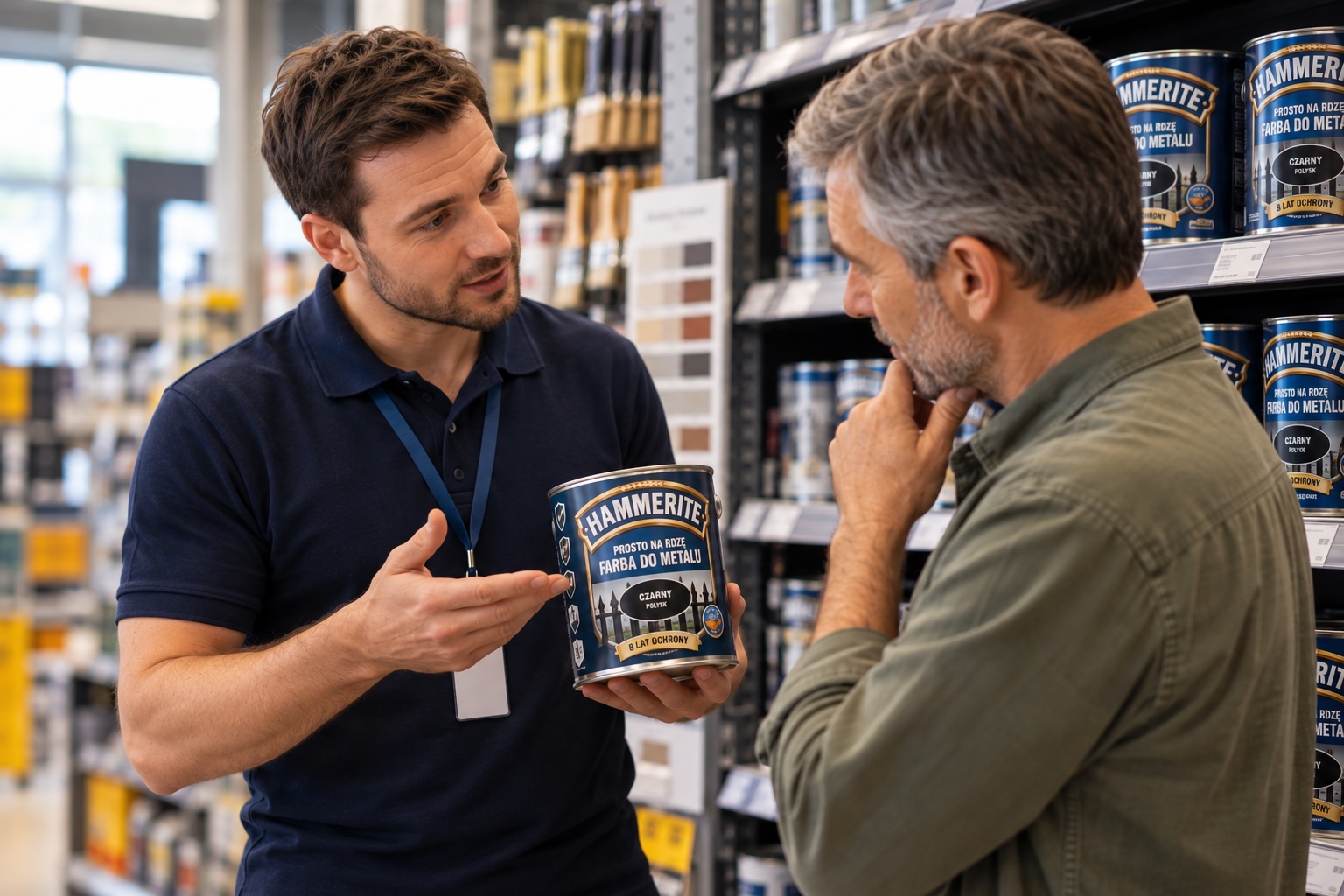
A sales team dispersed across the country, with deep technical knowledge that blurs between trainings. The customer at the shelf asks about product features, use and application. You have to answer right away — and there was nowhere to practise that conversation.
A virtual customer built solely on AkzoNobel materials: technical data sheets, talk track and real field questions. The rep steps into the role of a paint-store salesperson and holds the conversation on their own, any time.
A customer in a paint store asks about Hammerite: product features, use and application.
Convince the customer to buy: answer 11 questions and deliver 3 product claims.
Product knowledge and clarity of the message.
After each session the rep gets a score and concrete tips — what went well, what to improve and how close they got to the goal.
The response was very positive. Reps rated the conversation with the virtual customer as realistic, and most say that after the sessions they feel better prepared for a conversation with a real customer. They found this form of training helpful and would gladly use it for other products too.
Participant survey.
Product, customer type (manager, tradesperson, end customer) and mode — text or voice.
The virtual customer reacts like a real one. A goal-progress indicator shows how close you are to closing.
After the session — a competency score and concrete tips you'll use on the next attempt.
